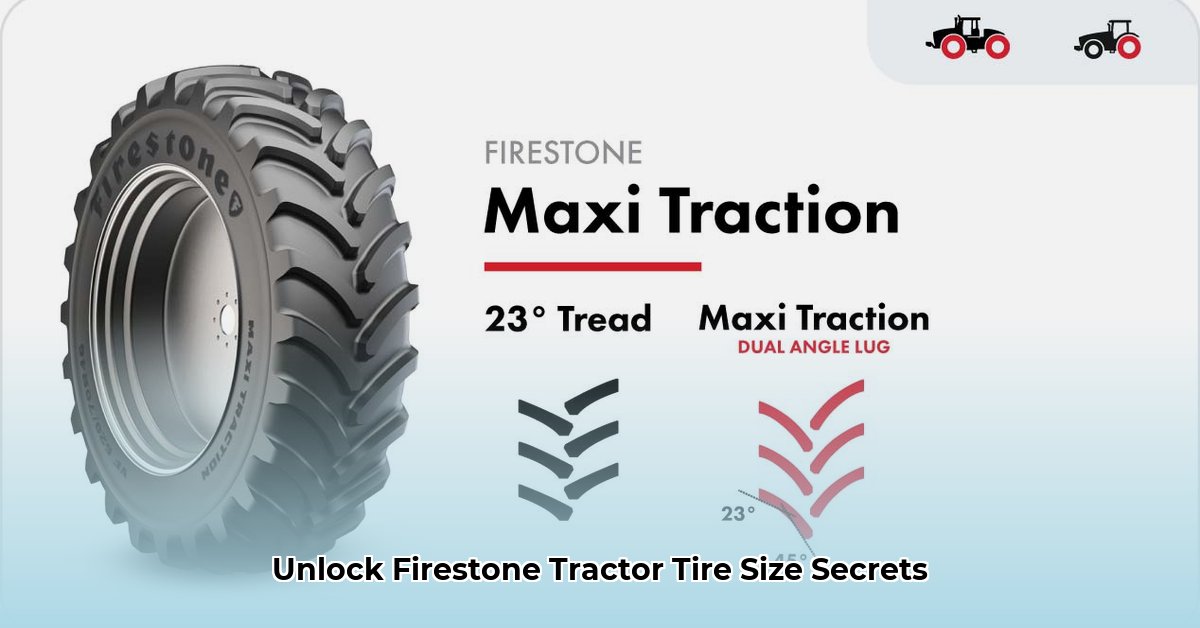
Firestone Tractor Tire Size Chart: Your Guide to Perfect Sizing
Choosing the right Firestone tractor tires is crucial for fuel efficiency, soil compaction, and overall machine longevity. Incorrect sizing can lead to increased fuel consumption, reduced traction, and even premature tire wear. This guide provides a step-by-step approach to accurately measuring your existing tires, understanding Firestone's size charts, and selecting the perfect replacement. For example, find more information on common sizes like 18.4-30 tires.
Decoding Firestone Tractor Tire Numbers
Firestone tire size codes aren't arbitrary; they convey precise dimensions. A typical size, such as "18.4-38," indicates the tire's section width (18.4 inches) and overall diameter (38 inches). Metric equivalents (millimeters) are also common; we'll show you how to convert between systems. Understanding these codes is the first step to successful tire selection.
Measuring Your Tractor Tires: A Precise Step-by-Step Guide
Accurate measurements are paramount. Before consulting any Firestone tire size chart, follow these steps:
- Safety First: Park your tractor on a level surface, engage the brakes, and ensure the machine is stable. Never work under a raised tractor without proper safety supports.
- Clean the Tires: Remove mud, dirt, and debris from the tire sidewalls for accurate readings.
- Measure the Section Width: Use a flexible tape measure to determine the widest part of the tire, from sidewall to sidewall, excluding the tread. Record this measurement in inches or centimeters.
- Measure the Overall Diameter: This is the distance across the tire's widest point, including the rim, usually taken with a measuring wheel. Convert the circumference to diameter (circumference/π). Record this measurement, again noting the units of measurement.
- Verify Sidewall Markings: Check the sidewall markings for printed tire size information. Compare this data with your measurements; slight discrepancies are acceptable, but major differences indicate a need for re-measurement.
Why is precise measurement so important? Inaccurate measurements lead to incorrect tire selection, thus impacting your tractor's performance and your operating costs. Did you know that a 10% error in tire size can significantly reduce fuel efficiency and tire life?
Metric to Imperial Conversions: A Simple Guide
Many Firestone charts utilize metric measurements (millimeters). Use the following conversion factors for precise results:
- 1 inch = 25.4 millimeters
- 1 millimeter = 0.03937 inches
A simple calculator can assist with conversions to ensure accuracy. Remember, precision is key in matching your tractor's needs.
Using Your Firestone Tractor Tire Size Chart
With your measurements in hand, utilize the Firestone tire size chart. These charts typically list tires by section width and overall diameter. Locate the size closest to your measurements. Consider the load capacity (weight the tire can safely support) and recommended air pressure listed on the chart.
Front vs. Rear Tires: Maintaining Balance
Maintaining the correct rolling circumference between front and rear tires, especially on tractors with front-wheel drive, is vital. Consult your Firestone chart and tractor's manual for recommended front-to-rear tire size ratios to optimize performance and minimize wear.
Beyond the Chart: Selecting the Right Tire for Your Needs
While the Firestone charts are essential, other factors influence your choice:
- Terrain: The type of soil directly influences tire tread pattern and construction. Deep treads are better for muddy conditions whereas a smooth profile is preferable for paved surfaces.
- Tractor Tasks: A tire suitable for plowing may not be ideal for hauling heavy loads. Consider what your tractor's primary functions are.
- Load Capacity: Always ensure your chosen tire's load capacity matches or exceeds the weight your tractor typically carries. Overloading tires is highly unsafe.
Dr. Amelia Hernandez, Agricultural Engineering Professor at Purdue University, advises, "Consider the long-term implications. A tire investment should consider not only initial costs but also the impact on fuel efficiency and soil health throughout its lifespan."
Troubleshooting Common Tire Sizing Issues
- Inconsistent Measurements: Re-measure using precise tools. Check that your measuring tape is not stretched or damaged.
- No Exact Match: Choosing a slightly different size is often acceptable, but always ensure the new tire's load capacity meets your tractor's needs.
- Uneven Tire Wear: Consult a mechanic to address potential alignment or other mechanical issues. Uneven tire wear usually indicates a problem beyond simple tire selection.
Choosing the correct tractor tire size is a critical investment in your farm's efficiency and sustainability. By carefully following these steps and consulting the Firestone tire size charts, you can optimize your tractor's performance and protect your investment.